
Find People Through Pasadena Records
Choose the first record by the fact already in hand. A current Pasadena street address points to the Los Angeles County Assessor. A full name may fit the Superior Court party search, a state license search, or the California business registry. An old address belongs in Pasadena city directories and the local news index. A death notice can lead to a probate file, deed transfer, or unclaimed-property entry. Each source answers a narrow question, so the safest match joins two or more official records.
Pasadena people search work often crosses three custodians. The city keeps municipal requests, code cases, police files, and local history. Los Angeles County controls recorder, assessor, court, elections, and many vital records. State offices add certificates, licenses, entities, custody data, and protected programs. Start small, note the exact spelling and date range, then move outward.
- Write down the name, address, date range, and relationship that can separate the right person from namesakes.
- Check the assessor for an address or the court index for a full name and likely case period.
- Compare the result with a business, license, directory, news, or probate source.
- Use the correct city, county, or state counter when the record is not online.
- Ask the custodian for a copy only after the index points to the right file.
Pasadena People Search Offices
The office name matters. Pasadena City Hall can route city files, but it does not keep the county deed index or the trial court database. The Los Angeles County Registrar-Recorder/County Clerk, usually shortened to RR/CC, holds recorded real-estate documents and county clerk records. The Pasadena Courthouse serves local matters within the Superior Court system. For rules, fees, redactions, and request steps, use the focused Pasadena public records access page.
Why Pasadena Deeds Stay Offline
Los Angeles County has recorded real-estate documents since 1851, yet its official grantor and grantee indexes are not on the internet. A grantor transfers an interest; a grantee receives it. The RR/CC explains that recorded pages can expose protected home addresses of elected or appointed officials, and the county cannot identify every such person before web publication. That turns Pasadena deed research into an in-person task at Norwalk.
Bring a name and an approximate recording year. The alphabetical indexes use both. Records from 1851 through 1957 are reviewed on the lower level, while records from 1958 onward are on the second floor. Telephone index searches are not accepted, and appointments may be set up to two weeks ahead. The official real-estate record review page shows why a web-only Pasadena people search can miss deeds, liens, releases, trust transfers, and notices.
The LA County recorder page below identifies the official custodian for this offline route.
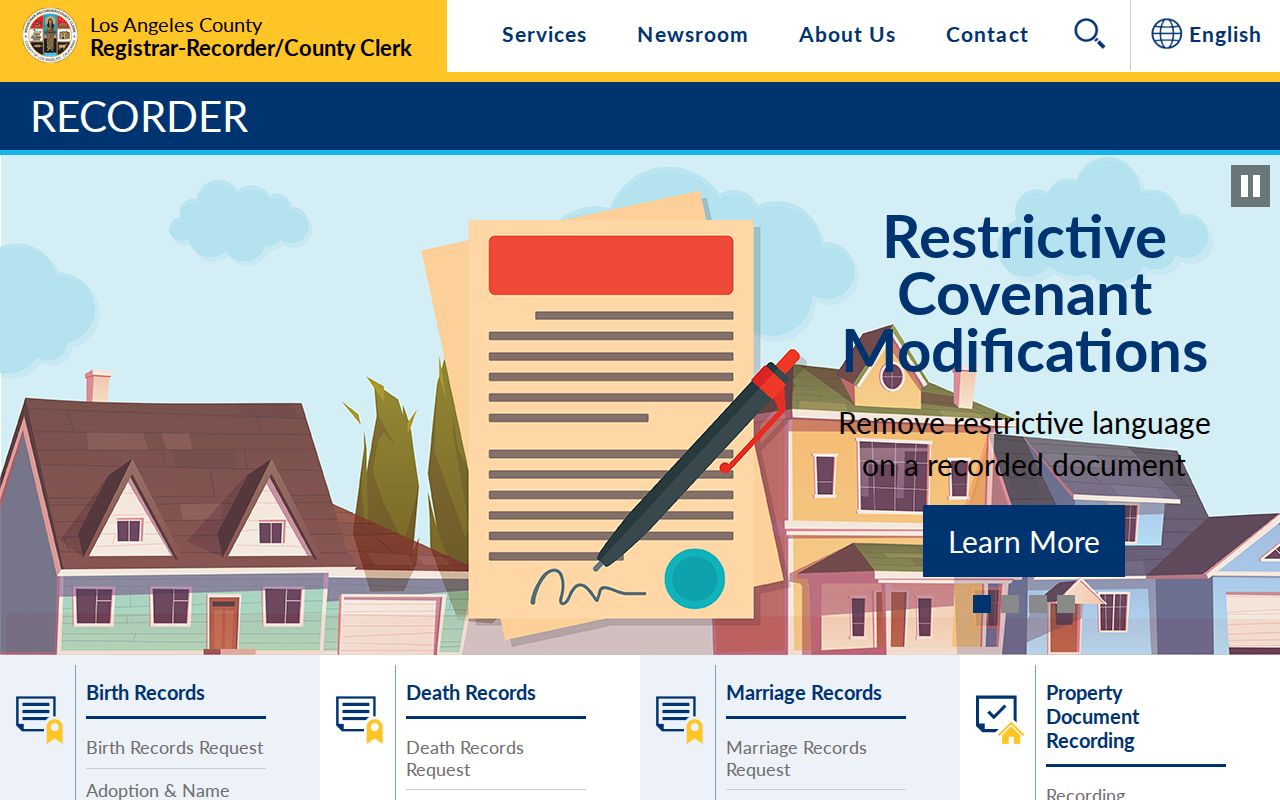
Use it to confirm the custodian before planning a Norwalk index visit.
Lawful personal use. Search public files for family, estate, civic, or safety needs, and never use a record to stalk, harass, or harm anyone.
Search Pasadena Property Records
An address can be more useful than a name. The LA County Assessor Portal accepts an Assessor Identification Number, called an AIN, or a street address. It also offers a legal-description route and map search. A situs address is the physical location of the parcel. It may differ from an owner's mailing address. The public app can connect the Pasadena address to an AIN, owner label, assessment terms, and parcel map context.
The assessor screen below provides the first half of an address trail.
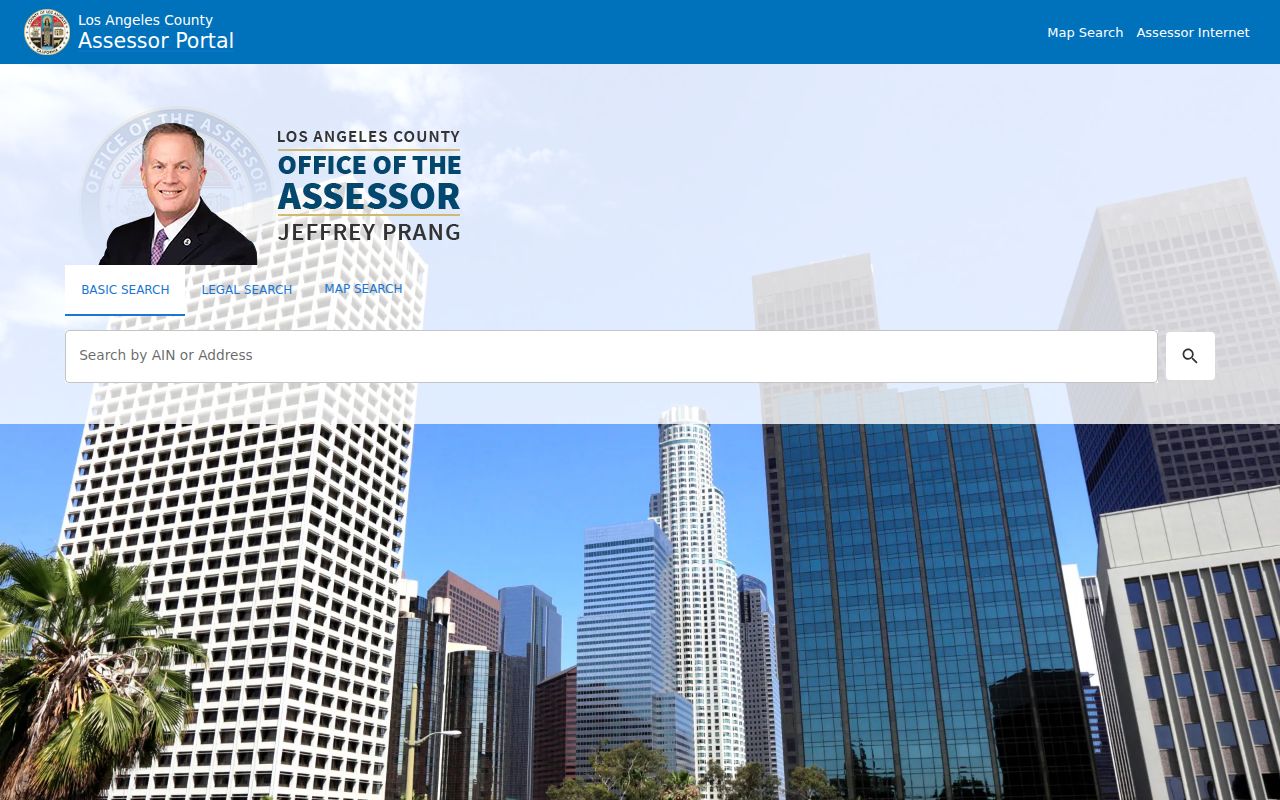
Record the AIN and exact situs before moving to recorder, permit, code, or directory sources.
- AIN
- The county's unique Assessor Identification Number for a parcel.
- Situs
- The physical property address shown on the assessment record.
- Legal description
- The lot, block, tract, or other land wording used to tie a parcel to recorded documents.
- Index
- A locator for a record, not necessarily the record image or a certified copy.
Pasadena Court Name Search
Pasadena civil, small claims, family, and probate matters sit in the Superior Court of California, County of Los Angeles. The paid Search for Case by Name covers litigants and returns a case type, filing date, filing location, and count of available document images. It is updated daily. Unlimited civil, probate, and family coverage begins in 1983, limited civil in 1991, and small claims in 1992. Older files go through court Archives.
The court name-search interface below sets clear scope and fee rules.
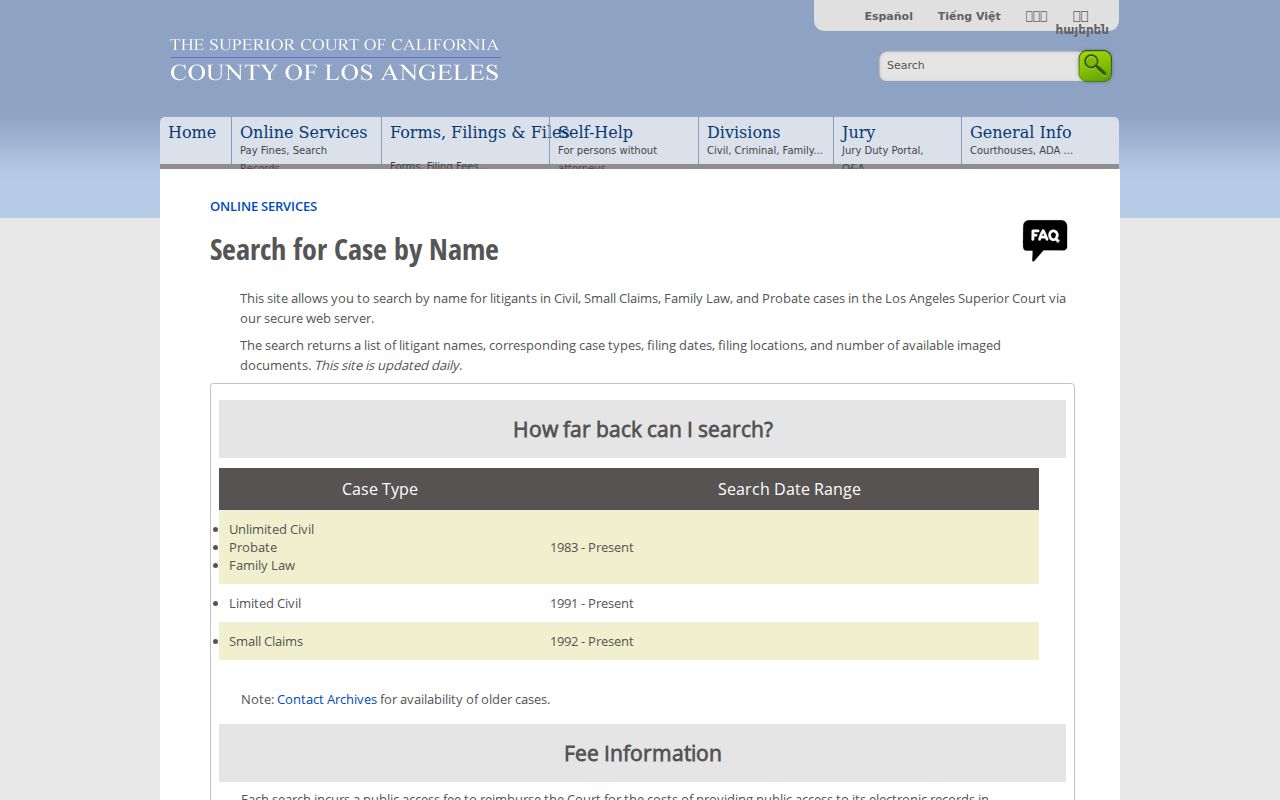
A result locates a case; it does not guarantee that every filing is public or online.
| Search field | What to enter | Result or limit |
|---|---|---|
| Case category | Civil, Small Claims, Family Law, or Probate | Sets the index searched |
| Litigant name | The party's name | Returns matching litigants and case facts |
| User mode | Registered account or guest | Guest searches cost $4.75 each |
| Archives | Older case request | Fallback before online coverage |
Criminal and traffic searches use separate services. Juvenile, adoption, sealed, mental-health, and parts of family or criminal files can be restricted. Federal cases use the Central District of California and PACER. Pasadena Courthouse also serves Altadena, Arcadia, Monrovia, and Sierra Madre, so a Pasadena filing location is not proof that all events occurred inside city limits.
The broader court hub below groups the available case routes.
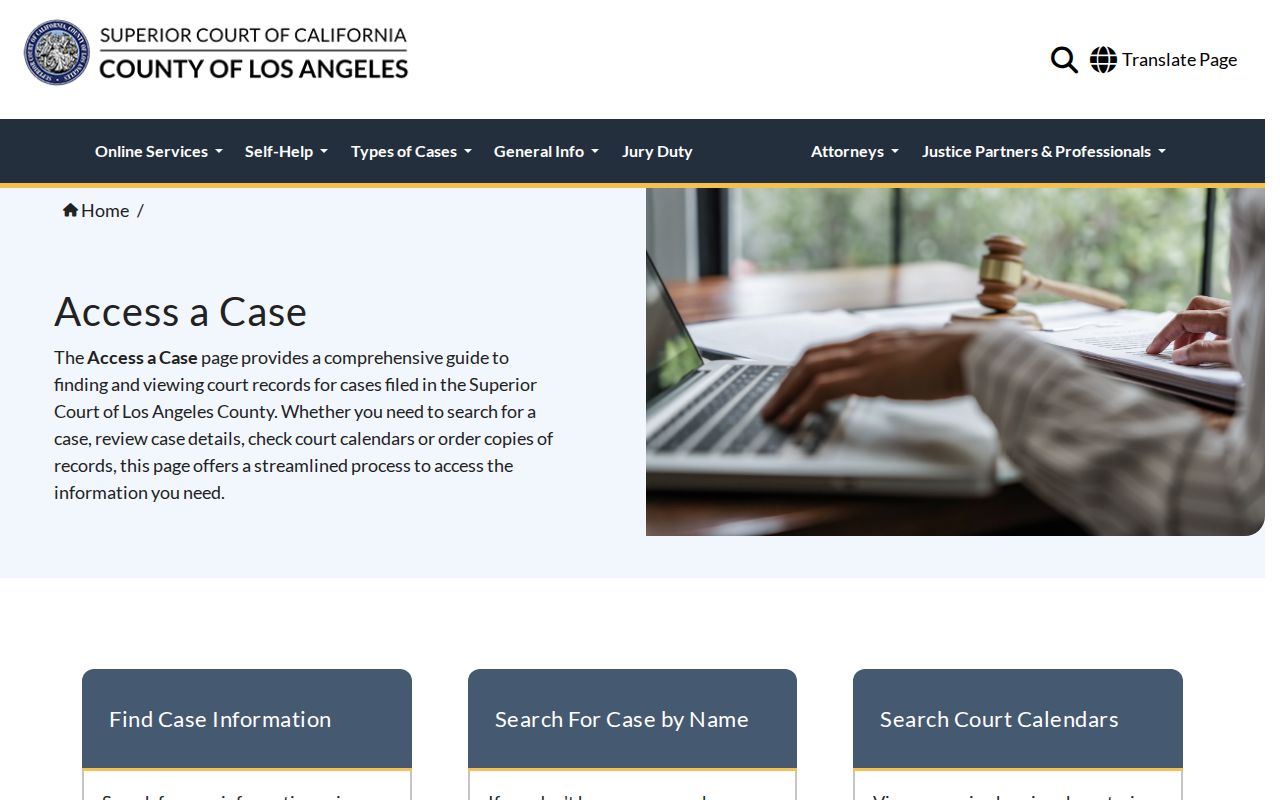
Choose the case type first, then use the clerk or archives when the index stops.
Pasadena Vital Records Paths
Pasadena vital records have three channels. Pasadena Public Health routes local birth and death questions at 626-744-6010. Los Angeles County RR/CC handles county birth, death, and marriage certificates. California Department of Public Health Vital Records, or CDPH-VR, supplies statewide birth, death, fetal death, marriage, and divorce record products. A divorce certificate is not the full court decree; the case file belongs with Superior Court.
California separates authorized and informational certified copies. An authorized birth, death, or marriage copy needs an eligible requester and a notarized sworn statement. An informational copy is marked as not valid to establish identity. The CDPH birth form says a birth record becomes available 21 days after the event. State averages listed during research were five to seven weeks for certified copies and nine to eleven weeks for amendments, while county offices may be faster.
For family history, a certificate request is only one route. Pasadena's news citations, city directories, probate index, photographs, and cemetery or funeral records may establish the same identity link with less restricted material.
Trace Old Pasadena Addresses
A house can carry a person search across a century. Pasadena Public Library says its city and business directories reach back to 1880. These volumes can place a surname at a street address, and later reverse directories may turn an address into an occupant. The Pasadena News Index supplies citations from local papers dating to 1880, then the library's microfilm collection supplies the article. It is a citation finder, not a full-text newspaper archive.
For the period from about 1920 through 1950, the City of Pasadena Planning Department architecture permit collection adds another layer. The Online Archive of California finding aid describes roughly 20 linear feet arranged by street and then address, with alteration papers in address envelopes. Those papers may name an owner, architect, builder, or applicant. Compare the directory year with permit papers, Sanborn maps, and a probate or deed trail.
Pasadena Directory Search History
Pasadena Museum of History holds a nearly complete run of city directories from 1893 through 1976, plus manuscripts, maps, local newspaper material, and an estimated one million images. Its Sanborn fire-insurance maps for 1910 and 1931 help reconcile old lots and building use. The museum's manuscripts reach back to the 1830s, while its ephemera begins in the 1870s. These are strong sources for families, clubs, local firms, and neighbors whose names never reached a court portal.
The public library and museum overlap, but access differs. Central Library history materials may be offsite during seismic work, so staff help or an appointment may be needed. The museum research library lists Friday through Sunday afternoon hours. Use the full Pasadena people directories inventory to choose between live staff lists, owner rolls, yearbooks, news citations, and historical volumes.
| Collection | Time depth | Best use | Access |
|---|---|---|---|
| Public Library city and business directories | Back to 1880 | Surname and old-address checks | Library staff and local history services |
| Pasadena News Index | Citations back to 1880 | Obituaries and local events | Index plus microfilm |
| PMH city directories | 1893 to 1976, nearly complete | Resident and firm history | Research Library and Archives |
| Architecture permit files | Circa 1920 to 1950 | Owners, builders, and address changes | Archive finding aid and repository |
Find Pasadena Business Records
A business name can reveal a person, service address, or filing history. California Secretary of State bizfile Online covers corporations, limited liability companies, and limited partnerships. Depending on the record, it can show the entity name, filing number, status, agent information, addresses, and filed documents. Los Angeles County RR/CC keeps fictitious business name filings, while Pasadena routes business-license questions through 626-744-4166.
The state business search screen below offers the direct path into those entity files.
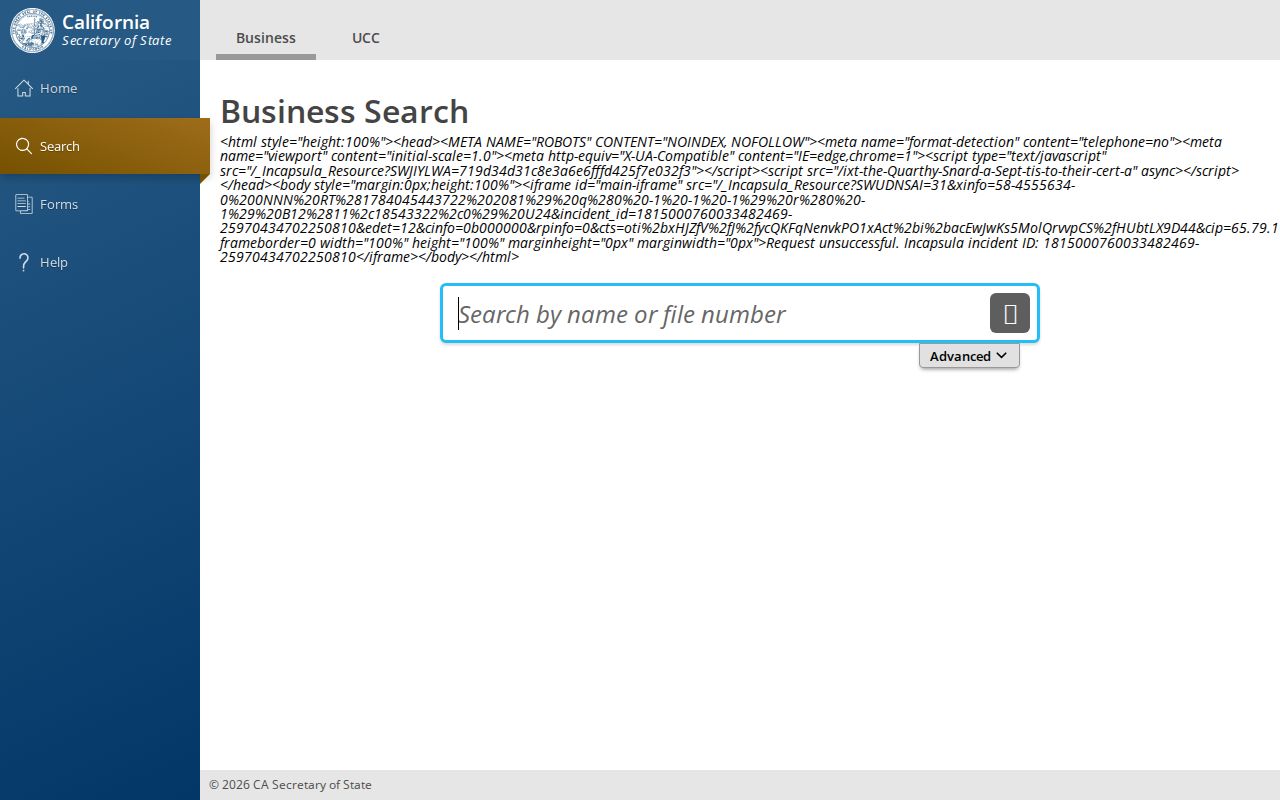
Confirm that a filing address or agent belongs to the right entity before joining it to a person.
California's separate UCC search lists financing statement parties and shows how current processing is. A July 2026 inspection displayed documents processed through July 10, 2026. That date is a currency marker, not a guarantee that every transaction has posted.
Pasadena License Search
The California Department of Consumer Affairs License Search helps verify people and firms regulated by its boards and bureaus. Its advanced fields include first name, last name, license number, business name, board or bureau, license type, city or county, status, and disciplinary-action filters. Results can show whether a license is current, expired, suspended, revoked, or otherwise subject to discipline. Board coverage varies, so read the record label before drawing a conclusion.
The DCA advanced search below displays those filters in one official form.
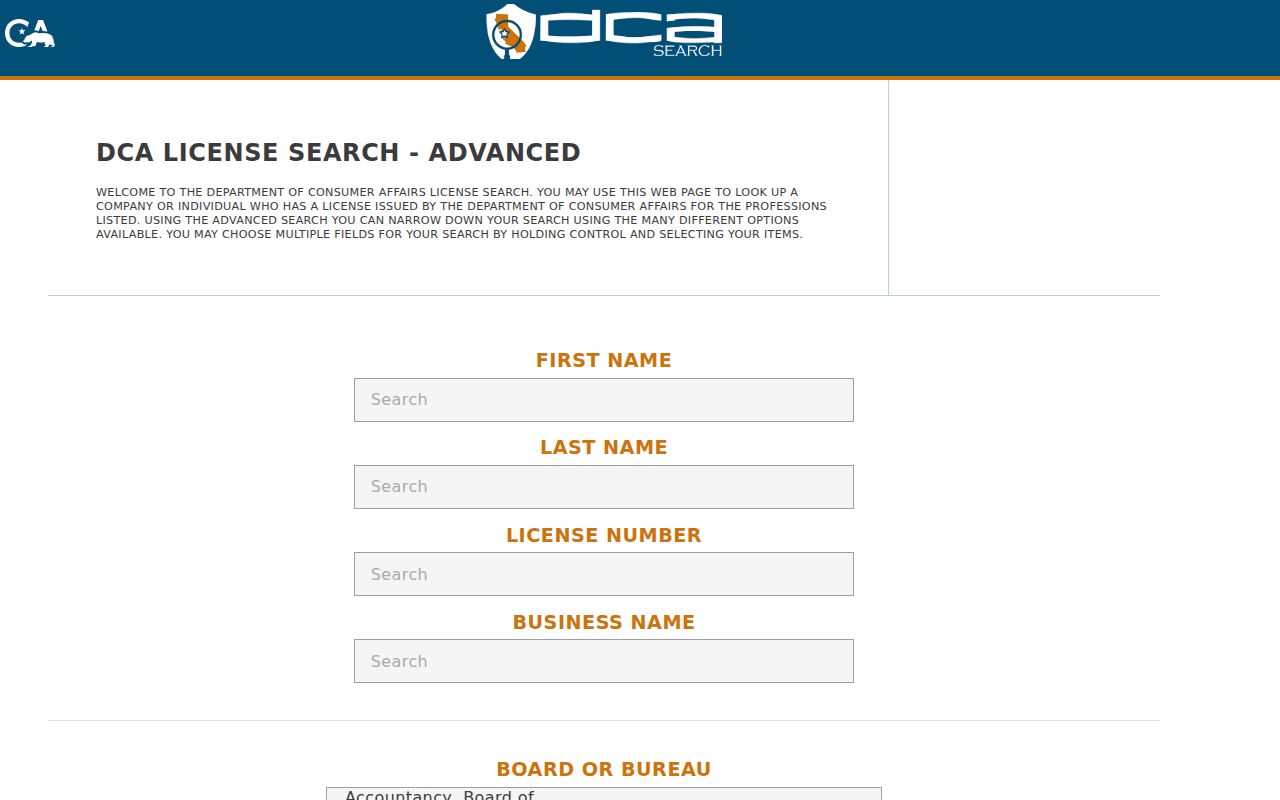
A license record is strongest when its name, city, board, and license number all agree with another source.
Pasadena Custody Record Lookups
Current county custody belongs with the Los Angeles County Sheriff's Department Inmate Information Center. The captured fields include last name, first name, middle name, and date of birth. A 24-hour county fallback number listed in research is 213-473-6080. State custody uses California Incarcerated Records and Information Search, or CIRIS. These are custody locators, not broad criminal-history files.
California's Megan's Law registry publishes only information that Penal Code section 290.46 permits DOJ to disclose. Some registrants do not appear, and the site does not disclose unrelated offenses. Pasadena Police files use a separate records request and may redact juvenile details, protected victim data, confidential sources, investigation methods, safety-sensitive facts, and other exempt material.
Search Pasadena Unclaimed Property
California's State Controller holds lost or forgotten property until it can be returned to the owner. A name search may surface a prior address, firm, estate, or heir lead. There is no deadline to claim state-held property and no fee to make the claim. That makes the official search useful both for reconnecting a family asset and for checking a fee demand from an unknown sender.
The Controller's unclaimed-property search page directs users to the free claim system.
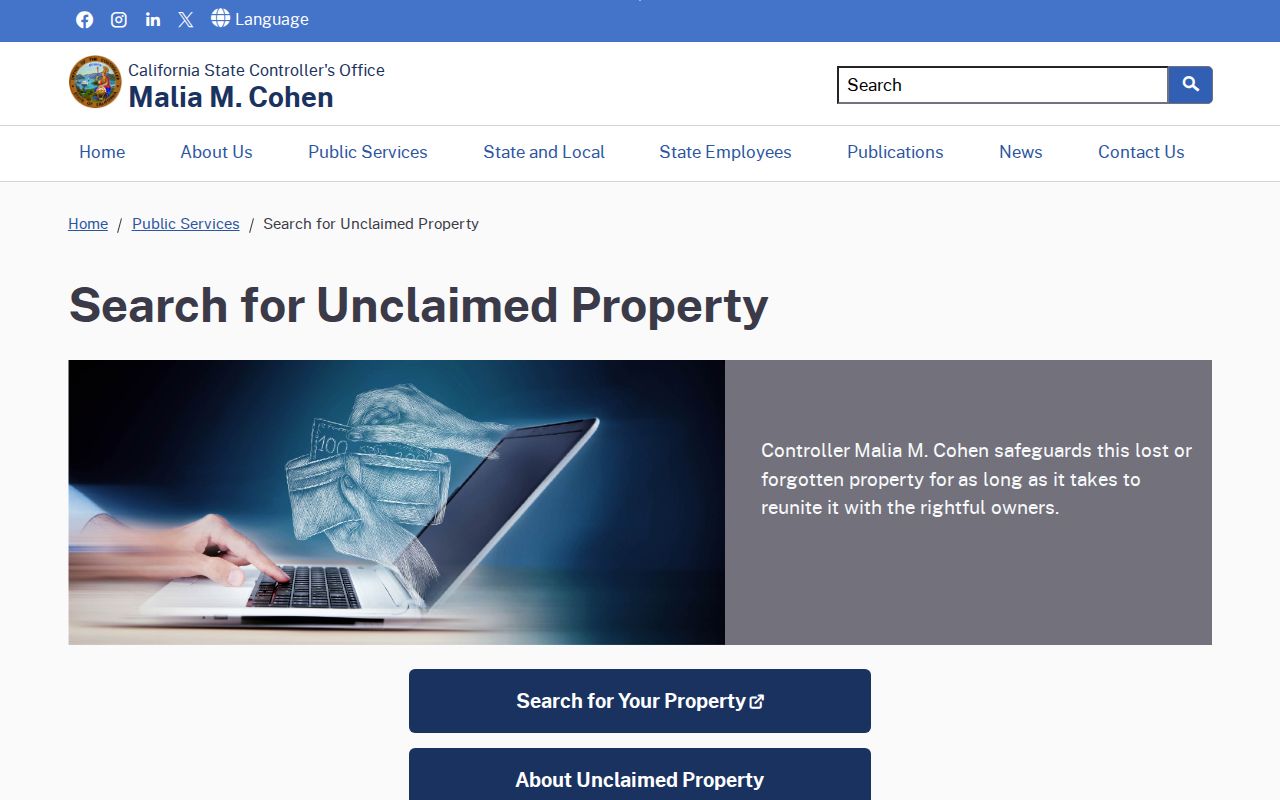
Match the reported owner and address carefully, then claim only through the state channel.
Pasadena Record Privacy Boundaries
Not every official file is open. California voter registration information is restricted to approved purposes and requesters. Driver license numbers, state identification numbers, the last four Social Security digits, signatures, and confidential voter records are excluded from released voter files. Safe at Home provides substitute-address services for eligible participants. Juvenile, adoption, sealed, and some family or mental-health court files also have firm limits.
The California Public Records Act lets any person request an identifiable public record, but an office need not create a new record or do research for the requester. Agencies generally have ten days to decide whether records are disclosable and can add a written fourteen-day extension for unusual circumstances. Exempt parts may be withheld while reasonably separable public parts are released.
Commercial reports should be treated as unverified leads. Official records name the custodian, state the scope, and provide a correction or copy route. Paid compilations can be stale, merge namesakes, or hide their source. A careful Pasadena people search returns to the original office before relying on a match.
Pasadena Family History Search
Family questions benefit most from the depth of Pasadena's local collections. A former classmate may appear in a yearbook, school item, or local paper citation. A deceased relative may connect through an obituary, probate name search, unclaimed-property entry, deed transfer, and city directory. A past home may link an occupant to an architecture permit, Sanborn map, photograph, or neighborhood story. Each step adds context that a single name index cannot supply.
Birth-parent research needs more care. California adoption and recent vital records are restricted, so official CDPH, adoption, and court processes must take the lead. Public record searches cannot bypass those rules. For heir work, probate files, deeds, notices, and obituaries can be joined with lawful assessor, business, and library records. Document each source, distinguish fact from inference, and let the custodian settle any conflict.
Pasadena's rare strength is the bridge between current government records and deep local memory. County indexes find the case or parcel. City directories, news citations, permits, maps, and photos show how that name fit the place.